

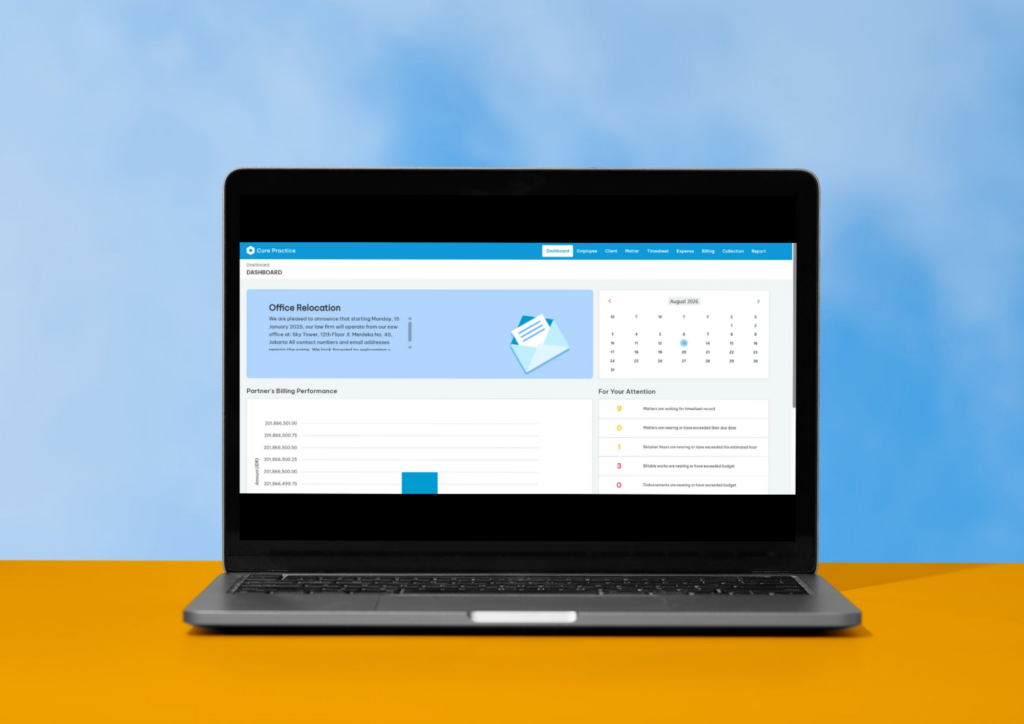
Managing multiple clients and legal matters can become increasingly complex as a law firm grows. Law firm management software helps keep daily operations organized by bringing client information, matters, documents, timesheets, and billing data into one connected system.
Without a centralized platform, important information can become scattered across spreadsheets, emails, folders, and communication tools. The challenge is not only the amount of information a law firm handles, but also ensuring that every detail remains connected to the correct client and matter.
Why Do Multiple Clients and Matters Become a Challenge?
A single client may have several matters with different requirements. At the same time, lawyers may be working on contract reviews, legal opinions, corporate advisory, due diligence, litigation, and other legal matters.
Each matter may involve different documents, deadlines, lawyer activities, and expenses.
When these activities are managed manually, partners may find it difficult to answer basic operational questions:
- Which matters are currently active?
- Which lawyers are responsible for each matter?
- How much time has been spent on a matter?
- Are there outstanding tasks or deadlines?
- How much has been spent on the matter?
- Is the work ready to be billed?
This is why matter management is an important part of modern law firm operations. Practice management platforms typically connect clients, matters, documents, activities, time tracking, and billing within a structured workflow.
Law Firm Management Software Connects Daily Legal Activities
A structured system allows each client to have multiple matters, with relevant information and activities organized under each matter.
For example:
Client → Matter → Lawyer → Task → Document → Timesheet → Expense → Billing
When a lawyer records time, the entry can be associated with the relevant matter. Documents can also be organized by matter, while expenses and billing can use the same underlying information.
This reduces duplicate data entry and minimizes the need to move information between different systems. More importantly, it gives partners better visibility into the firm’s ongoing work.
Law Firm Management Software Can Improve Operational Efficiency
Efficiency does not mean asking lawyers to work faster or reducing the quality of legal services.
Instead, it means reducing unnecessary administrative work.
With a connected workflow, lawyers can spend more time on legal research, drafting, analysis, negotiation, and client advisory. Meanwhile, partners and management can access operational data to evaluate productivity, time utilization, billing, and matter performance.
This allows management decisions to be supported by actual operational data rather than assumptions or incomplete spreadsheets.
What Should Law Firms Look for in Management Software?
Law firms should not choose software based solely on the number of features available. The more important question is whether the system can support the firm’s actual workflow.
Key capabilities to consider include:
- Matter management to organize work by client and matter.
- Document management to keep legal documents structured and accessible.
- Timesheet management to track lawyers’ working hours.
- Expense management to record matter-related expenses.
- Billing and invoicing to support a more organized billing process.
- Reporting to provide visibility into firm activities and performance.
A connected workflow can help law firms establish more consistent processes while making daily operations easier to monitor.
Managing multiple clients and matters requires more than an increasingly complex spreadsheet. Law firms need a system that can connect legal work, documents, time, expenses, billing, and operational data within a structured workflow.
Law firm management software can help firms organize their operations, improve partner visibility, and reduce repetitive administrative tasks.
Ultimately, technology is not about replacing the way lawyers work. It is about creating better processes around their work so lawyers can focus on what matters most: delivering high-quality legal services to their clients.
Frequently Asked Questions (FAQ)
What are the benefits of management software for law firms?
It helps law firms manage clients, matters, documents, timesheets, expenses, billing, deadlines, and reporting in a more structured way.
Is law firm management software only useful for large firms?
No. Small and mid-sized law firms can also benefit from management software, particularly as their number of clients and matters increases.
What is the difference between a client and a matter?
A client is the individual or organization receiving legal services, while a matter refers to a specific legal engagement or assignment handled for that client.
Can law firm software help with billing?
Yes. When timesheets and expenses are connected to matters, the data can support a more accurate and organized billing and invoicing process.
Why is matter management important for law firms?
Matter management helps organize information and activities around specific legal engagements, making it easier for lawyers and partners to monitor the status and progress of each matter.