


Every lawyer has experienced it.
A document cannot be found when it is urgently needed. Timesheets are completed days after the work has been finished. Clients request updates, yet matter information is scattered across emails, messaging apps, and spreadsheets.
These challenges are rarely caused by a lack of legal expertise. On the contrary, many law firms have highly skilled legal professionals but continue to rely on manual administrative processes that consume valuable time and limit productivity.
As client expectations continue to rise, law firm efficiency has become more than an operational objective. It is now a strategic advantage that influences service quality, profitability, and long-term business growth.
Why Many Law Firms Still Struggle with Efficiency
Managing a law firm involves far more than providing legal advice. Lawyers are expected to manage matters, draft legal documents, record billable hours, communicate with clients, monitor deadlines, and prepare billing all while maintaining accuracy and responsiveness.
When these activities are handled across multiple disconnected systems, inefficiencies become inevitable. Information is difficult to access, collaboration slows down, and administrative errors become more common.
Some of the most common operational challenges include:
- Documents and matter information stored across multiple folders, email threads, and applications, making retrieval slow and inconsistent.
- Billable hours recorded days later, resulting in missed time entries and lost revenue opportunities.
Although these issues may seem minor individually, they accumulate over time. The result is reduced productivity, slower billing cycles, and increased operational costs.
Consider a mid-sized law firm in Jakarta that relied on spreadsheets for time recording. Most lawyers completed their timesheets at the end of each month, causing many short client calls, document revisions, and internal discussions to go unrecorded. After implementing real-time digital time tracking, the firm gained greater visibility into lawyer productivity while significantly reducing unbilled work.
How Law Firm Efficiency Strengthens Client Trust
Improving law firm efficiency is not simply about completing work faster. It directly affects the client experience.
Clients expect prompt responses, transparent communication, accurate invoices, and consistent updates throughout the lifecycle of their legal matters. When lawyers spend excessive time on administrative work, they inevitably have less time to focus on strategic legal advice and client relationships.
By contrast, firms with structured operational processes deliver more responsive service, improve collaboration across legal teams, and build stronger long-term trust with their clients.
Why Traditional Approaches Eventually Reach Their Limits
Many firms attempt to improve operations through document templates, standard operating procedures, shared spreadsheets, or additional administrative staff.
While these approaches can be effective during the early stages of growth, they become increasingly difficult to manage as the number of lawyers, matters, and clients expands.
Spreadsheets were never designed to manage the full operational complexity of a modern law firm. Information becomes duplicated, reporting requires additional manual effort, and collaboration becomes increasingly fragmented.
At this stage, many firms begin evaluating more scalable operational solutions.
Why More Law Firms Are Investing in Practice Management Software
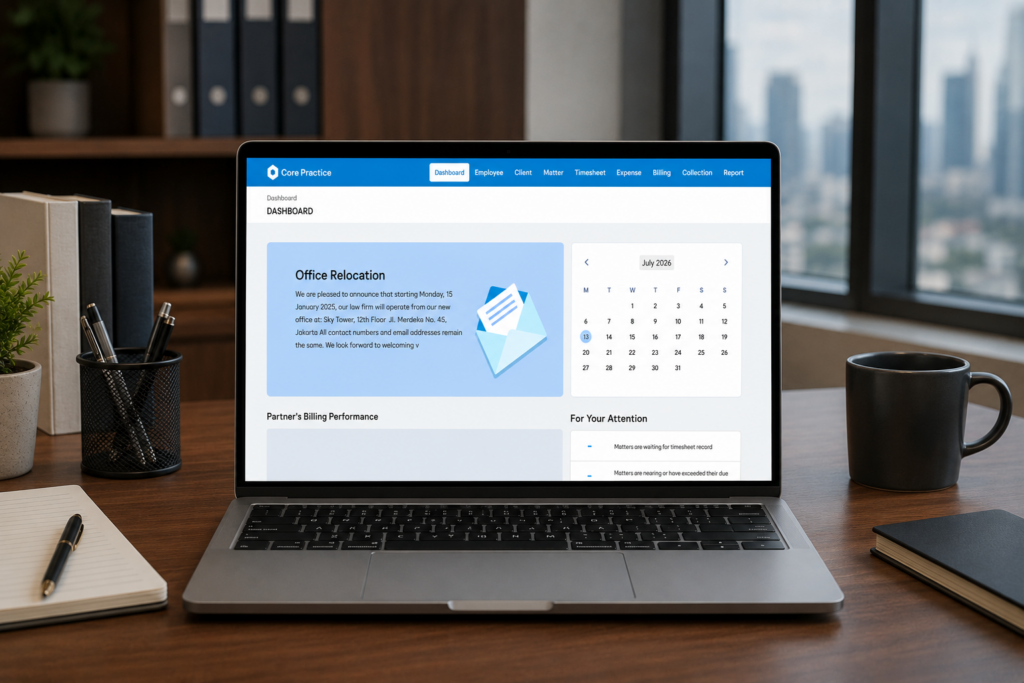
Leading firms are increasingly adopting practice management software to centralize their operations within a single platform.
Instead of switching between multiple applications, lawyers can manage:
- Matters, legal documents, digital timesheets, billing, tasks, and calendars from one centralized system.
- Operational reporting that provides partners with real-time visibility into matter progress, lawyer utilization, and overall firm performance.
This integrated approach enables legal teams to work from a single source of truth, improving collaboration, reducing administrative overhead, and supporting faster business decisions.
For example, a growing boutique law firm struggled to monitor deadlines because each lawyer maintained their own tracking method. After implementing a centralized practice management system, partners gained real-time visibility into every matter without requesting manual status updates, significantly improving coordination and reducing the risk of missed deadlines.
Operational Efficiency Is a Business Strategy, Not Just an IT Initiative
Today’s most successful law firms compete on more than legal expertise. They also compete on responsiveness, operational excellence, and client experience.
The longer a firm depends on manual processes, the greater the risk of losing productive time, overlooking billable work, and delivering inconsistent client service.
Digital transformation is not about replacing lawyers. It is about equipping legal professionals with better systems so they can focus on delivering high-value legal services instead of administrative tasks.
Investing in law firm efficiency is ultimately an investment in stronger client relationships, healthier profitability, and sustainable long-term growth.
Download the Free Guide
Want to learn how leading law firms are modernizing their operations and improving client service?
Download our free guide:
Digital Transformation in Law Firms: How Top Law Firms Increase Efficiency and Client Trust
The guide explores practical strategies for improving operational efficiency, strengthening collaboration, implementing digital workflows, and building greater client trust.
=> Download your free guide here: https://prohukum.com/guide/
Frequently Asked Questions
What is law firm efficiency?
Law firm efficiency refers to a firm’s ability to streamline operations, reduce administrative work, improve lawyer productivity, and deliver higher-quality legal services through optimized processes.
Why is law firm efficiency important?
Greater efficiency helps law firms reduce administrative overhead, improve billing accuracy, accelerate client service, and support sustainable business growth.
How can a law firm improve efficiency?
Law firms can improve efficiency by standardizing workflows, digitizing documents, implementing real-time time tracking, and adopting an integrated practice management platform.
Is practice management software only suitable for large law firms?
No. Small and boutique law firms can benefit just as much by improving collaboration, organizing legal matters more effectively, and simplifying billing processes.
How does law firm efficiency improve client trust?
Efficient operations enable lawyers to respond more quickly, communicate more consistently, provide transparent billing, and deliver a more professional client experience key factors in building long-term client trust.