


Operational challenges often become more visible as legal matters continue to grow. What initially feels manageable can gradually turn into inefficient workflows, delayed billing, and scattered case updates that slow down daily operations. This is where legal tracking software becomes increasingly important for modern legal practice.
In daily legal practice, operational issues frequently create unnecessary delays and revenue leakage. Common problems include:
- incomplete attorney timesheets
- delayed invoicing
- scattered case information
- difficulty monitoring case progress
- lack of visibility into team productivity

These issues are especially common in growing law firms handling multiple matters simultaneously.
Why Legal Tracking Software Is Becoming Essential
Many law firms still rely on spreadsheets, messaging applications, and manual reporting processes to manage legal operations.
While these methods may work temporarily, they often become inefficient as the firm grows.
For example, associates commonly record their timesheets at the end of the week instead of in real time. As a result, important billable activities are forgotten and not included in client invoices.
From an operational perspective, revenue leakage in law firms is rarely caused by a lack of work. More often, it is caused by inconsistent time tracking and inefficient administrative workflows.
In addition, corporate clients increasingly expect detailed billing transparency, including:
- work duration
- activity descriptions
- case progress updates
- structured billing reports
Without a proper system, generating these reports can consume significant administrative time.
The Business Impact of Manual Operations
Manual workflows may appear manageable, but over time they can create serious operational inefficiencies.
Revenue Leakage
Unrecorded legal work directly impacts billable hours and reduces potential revenue.
Slower Cash Flow
Delayed invoicing often leads to delayed payments from clients.
Limited Operational Visibility
Partners may struggle to evaluate lawyer productivity and identify the most profitable matters.
Administrative Overload
Lawyers and support teams spend excessive time on administrative tasks instead of focusing on legal strategy and client service.
How Legal Tracking Software Improves Law Firm Operations
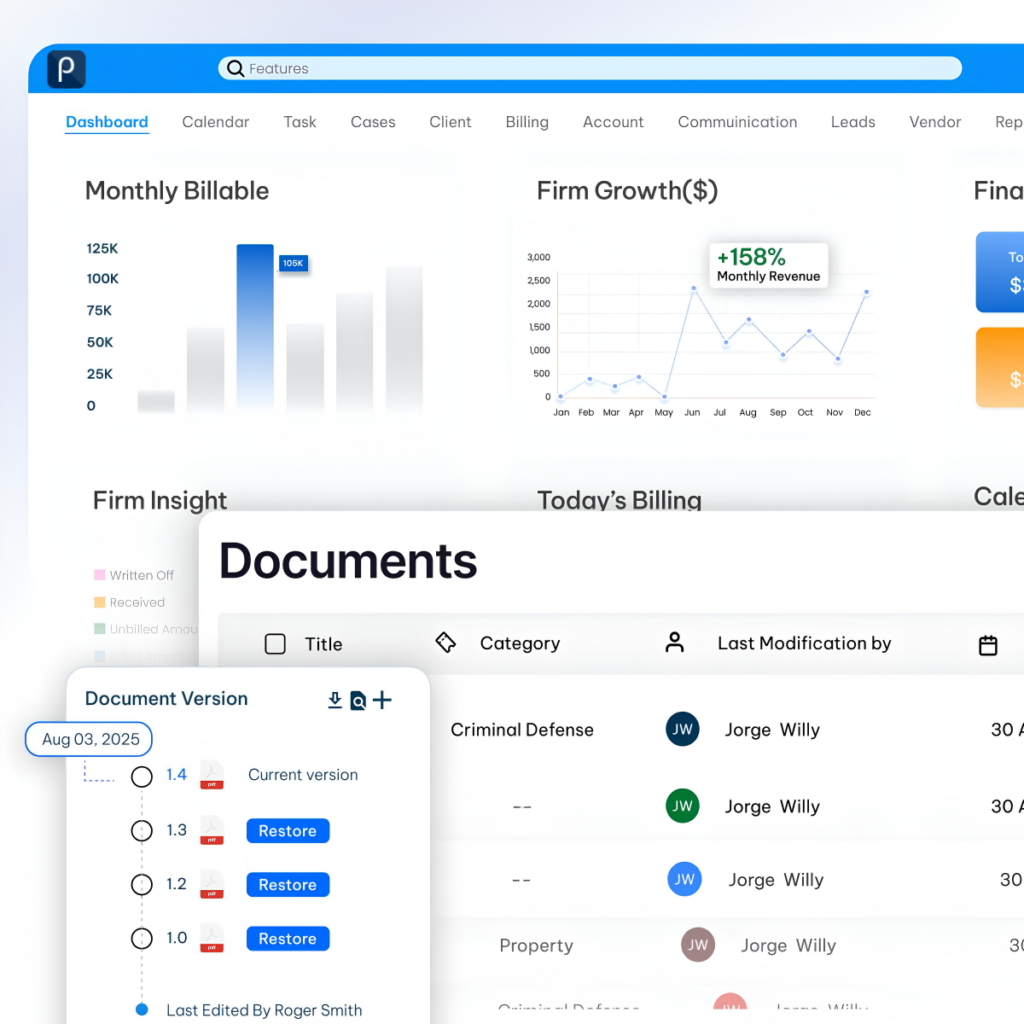
Implementing legal tracking software helps law firms centralize and streamline their operational processes.
Key features commonly used by law firms include:
- attorney timesheet management
- legal time tracking
- matter monitoring
- billing management
- document organization
- operational reporting
With an integrated system, lawyers can record activities in real time, reducing the risk of missed billable hours.
Partners and managers also gain better visibility into ongoing matters, team performance, and operational efficiency.
For growing firms, adopting legal tracking software is no longer simply about digital transformation. It is about building a more scalable and sustainable business operation.
The Future of Efficient Law Firm Management
As legal matters become more complex and client expectations continue to rise, manual operational systems become increasingly difficult to maintain.
Law firms that want to grow efficiently need structured workflows, accurate time tracking, and better operational visibility.
For this reason, many modern firms are now implementing legal tracking software to improve billing accuracy, streamline workflows, and support long-term operational growth.